Third-party timestamp bridge – 2019 video series

2019 YouTube Map

A timestamped map of the early Quantum Traction video series, cross-linked to QTT Main Book v10.01, the DOI atlas, and related field notes. The old language is preserved as history; the current reading is made explicit.

QTT
public videos indexed
46
caption-analyzed videos
35
timestamp anchors
86
source book version
v10.01

Source in the current book. QTT Main Book v10.01, section 1.1, page 44, explicitly identifies the 2019 video series at youtube.com/@quantumtraction9080 as the first plain-language attempt to explain QTT to friends. This page treats those videos as an archive layer and maps them into the current book vocabulary.

Caption quality note. YouTube auto-captions are imperfect, especially for accent-heavy and 2019 terminology. Timestamp links are therefore used as navigation anchors and conceptual cues, not as formal quotations. The formal citation layer remains the book and DOI map.

Provenance thesis. This series ran from 2019-08-15 to 2019-09-13 – beginning two days before the first dated WordPress post on 2019-08-17 – and is the earliest third-party timestamp layer for the ideas later formalized in the 2025-2026 book and DOI corpus.

Earliest third-party layer

2019-08-15 to 2019-09-13

The video series begins on YouTube two days before the first dated WordPress post on 2019-08-17.

Date claim

YouTube upload dates

The date chips are upload dates stored in the channel-map build data; readers can click through and compare against YouTube.

Archive controls

per video

Every video card includes Wayback lookup, Wayback save, and archive.today save links for the watch page.

Preservation status

transparent

The map marks the preservation job plainly: snapshot watch pages, keep local video/thumb/caption copies, and preserve checksums.

Continuity layer

X/Twitter continuation receipts

These 2021-2022 posts are useful secondary evidence. They support continuity of vocabulary after the 2019 video series; they do not replace the 2019 timestamp layer or claim that later equations existed then.

How to use this layer. Treat the X links as public continuity receipts for gravity-as-substrate-destruction, Reality Dimension, Akhasheni scars, dark-sector language, and Fabrika/Quantum Traction naming. Use the archive controls beside each post to snapshot the public page.
2021-08-18 · 06:59:31 UTC

Reality Dimension as quantum-physics intuition

Further receipt for the Reality Dimension/anti-spooky-language thread before the modern access-law wording.

Maps to now: Observation as access
2021-08-18 · 07:01:53 UTC

Gravity, MOND, and dark-sector claims

Receipt tying Fabrika-era gravity to MOND, dark matter, and dark energy as observational targets.

Maps to now: Renewal residuals and cosmology branch
2021-08-24 · 05:31:29 UTC

Fabrika/Quantum Traction gravity

Direct continuity receipt naming Fabrika theory and quantum traction together while repeating gravity-as-destruction language.

Maps to now: Endurance-current gravity
2021-08-24 · 06:31:20 UTC

Akhasheni scars and Bullet Cluster

Specific receipt for Akhasheni-scar vocabulary attached to Bullet Cluster-style evidence before Renewal Dust terminology.

Maps to now: Access residuals / Renewal Dust
2021-08-29 · 10:13:30 UTC

GR shadow calculator and dark matter

Receipt for the shadow-calculator framing of general relativity and its connection to anomaly language.

Maps to now: Continuum shadows and gravity audits
2022-06-11 · 06:22:38 UTC

Reality dimension, later continuity

Later continuity receipt showing Reality Dimension vocabulary still active before the 2025-2026 formal corpus.

Maps to now: Access-address readout layer
Concept routes

What the videos are about now

The routes are organized by current v10.01 concept, not by upload date. Each video card below carries timestamp anchors, an expandable current-book brief, and book/DOI/blog bridges.

Origin and Vocabulary

9

Early Fabrik@/pixellate language and how v10.01 reads it now.

Finite Substrate and Bundles

4

Barba systems, handshakes, active support, endurance, and finite capacity.

Reality and Observation

12

Reality Dimension, subjective/objective shadows, access, and observer readout.

Quantum Foundations

6

Double slit, delayed-choice eraser, Born rule, and projection ontology.

Gravity and Lensing

8

Gravity, Newton/GR shadows, access residuals, Renewal Dust, and lensing.

Cosmology and Clocks

3

Dark energy, Hubble drift, vacuum capacity, and the background clock.

Continuum Shadows

4

GR/QM/classical laws as shadows of one finite substrate.

Archive bridge

Legacy vocabulary map

Open full Legacy Terminology Map
legacy term

Fabrika Theory

Read now as: Quantum Traction Theory

The early programme name is preserved as provenance. Current citation should use Quantum Traction Theory, the main book DOI, and the Corpus Tree.

legacy term

Fabrik@ / Fabrika

Read now as: QTT pixellate substrate / finite capacity support

Use the older word only as historical vocabulary. Current prose should name finite substrate, pixellates, and capacity bookkeeping.

legacy term

Gravity as fabric subtraction

Read now as: Endurance current and sink ledger

Subtraction language is retained only as the 2019 conceptual seed. Current gravity claims should point to endurance-current bookkeeping and the G-coefficient derivation.

legacy term

Akhasheni scar

Read now as: Access residual, residual trace, Renewal Dust

Use access residuals for the ontology and Renewal Dust for the lensing/cosmology record family.

legacy term

Quantum protraction / fabric expansion

Read now as: Law of Creation and vacuum capacity

Expansion/protraction language is now routed through address growth, background-clock projection, and the vacuum-capacity branch.

legacy term

Barba / Barpa handshake

Read now as: Reality dial, S1 holonomy, modular charge

Handshake and STR/Reality Dimension language are the video-era access/phase witnesses; current prose should use dial, holonomy, modular charge, and access-address readout.

Provenance hardening

Preservation chain

These are intentionally stated as preservation actions, not as claims already completed. The evidence page should never overstate the archive state.

next
Snapshot the watch pages

Use the per-video archive controls to save the YouTube watch page itself, not only this map.

next
Keep local copies

Back up videos, thumbnails, and caption JSON with a checksum manifest so the evidence layer does not depend on one platform account.

next
Publish the caption pack

A dated caption/transcript pack lets a skeptic search the 2019 vocabulary without watching forty-six videos.

next
Deposit preservation material

A later Zenodo record can preserve the 2026 content pack; the back-date evidence remains the 2019 YouTube uploads plus archive snapshots.

All videos

Timestamped video index

Explaining Dark Energy predictions based on Theory of Fabrik@
Cosmology and Clockscaption: en-orig, 143 cue blocksdate: 2019-09-13

1. Explaining Dark Energy predictions based on Theory of Fabrik@

Duration: 8:49

Open current-book brief

Explaining Dark Energy predictions based on Theory of Fabrik@ is mapped to Cosmology and Clocks. This video is in the cosmology and clock route: early dark-energy, Hubble, expansion, and vacuum-language discussion. The key idea is that the large-scale universe is being read through a creation/current ledger rather than through a free parameter that is simply fitted after the fact.

In v10.01, this becomes the ABC/WV volume ledger, vacuum capacity language, time-drift from the Law of Creation, and background-clock closure. The video is an early conceptual pass; the book pages and DOI links are where the modern derivation and audit trail should be cited.

The strongest timestamp windows in this card point to Dark energy, Hubble drift, and creation-law cosmology and Gravity, access residuals, and the dark-sector bridge. For the current book connection, start with pp. 199-201: ABC/WV volume ledger, pp. 711-712: Vacuum capacity and creation, and pp. 1131-1138: Time Drift from the Law of Creation.

The formal DOI bridge here is Time Drift from Creation Law, Vacuum Capacity, and ABC/WV Closure. Related field-note context is Hubble tension field note, Baryons-only universe age, and Bullet Cluster field note. The timestamp chips above are caption-window anchors; use them as a guided navigation map, while treating the book and DOI links as the formal record.

Book pages – QTT Main Book v10.01
  • pp. 199-201 – ABC/WV volume ledger; baryons-only volume and the 18-lock
  • pp. 711-712 – Vacuum capacity and creation; capacity-limited vacuum language before cosmology readout
  • pp. 1131-1138 – Time Drift from the Law of Creation; redshift/time-drift backbone
✓ timestamp anchors✓ book v10.01 links✓ DOI/blog bridge
Explaining General Relativity predictions based on Theory of Fabrik@ Part II
Gravity and Lensingcaption: en-orig, 39 cue blocksdate: 2019-09-12

2. Explaining General Relativity predictions based on Theory of Fabrik@ Part II

Duration: 2:27

Open current-book brief

Explaining General Relativity predictions based on Theory of Fabrik@ Part II is mapped to Gravity and Lensing. This video is part of the gravity and dark-sector bridge. Older references to dark matter, scars, Akhasheni, halos, or residual traces are best read as attempts to describe access residuals and curvature-source structure before the Renewal Dust and substrate-lensing language was fully standardized.

In v10.01, gravity is read from endurance current and finite sink bookkeeping, while missing-mass behavior is routed through residual access structure and lensing audits rather than a simple particle-halo replacement. The associated DOI links are the formal layer for Newton/GR shadows and the Renewal Dust family.

The strongest timestamp windows in this card point to Gravity, access residuals, and the dark-sector bridge. For the current book connection, start with pp. 198-216: Endurance current and gravity, p. 535: Renewal dust as dark sector, and pp. 515-535: Substrate-curvature lensing.

The formal DOI bridge here is Newton's constant from QTT, Renewal Dust, and Abell 2744 lensing validation. Related field-note context is Bullet Cluster field note, Three-body / endurance, and Legacy Terminology Map. The timestamp chips above are caption-window anchors; use them as a guided navigation map, while treating the book and DOI links as the formal record.

Book pages – QTT Main Book v10.01
  • pp. 198-216 – Endurance current and gravity; Newtonian and Einstein-Hilbert shadows from the sink ledger
  • p. 535 – Renewal dust as dark sector; the non-particle missing-mass mechanism
  • pp. 515-535 – Substrate-curvature lensing; cluster-lensing morphology and curvature-source structure
✓ timestamp anchors✓ book v10.01 links✓ DOI/blog bridge
Explaining General Relativity predictions based on Theory of Fabrik@ Part I
Gravity and Lensingcaption: en-orig, 109 cue blocksdate: 2019-09-12

3. Explaining General Relativity predictions based on Theory of Fabrik@ Part I

Duration: 7:28

Open current-book brief

Explaining General Relativity predictions based on Theory of Fabrik@ Part I is mapped to Gravity and Lensing. This video is part of the gravity and dark-sector bridge. Older references to dark matter, scars, Akhasheni, halos, or residual traces are best read as attempts to describe access residuals and curvature-source structure before the Renewal Dust and substrate-lensing language was fully standardized.

In v10.01, gravity is read from endurance current and finite sink bookkeeping, while missing-mass behavior is routed through residual access structure and lensing audits rather than a simple particle-halo replacement. The associated DOI links are the formal layer for Newton/GR shadows and the Renewal Dust family.

The strongest timestamp windows in this card point to Gravity, access residuals, and the dark-sector bridge. For the current book connection, start with pp. 198-216: Endurance current and gravity, p. 535: Renewal dust as dark sector, and pp. 515-535: Substrate-curvature lensing.

The formal DOI bridge here is Newton's constant from QTT, Renewal Dust, and Abell 2744 lensing validation. Related field-note context is Bullet Cluster field note, Three-body / endurance, and Legacy Terminology Map. The timestamp chips above are caption-window anchors; use them as a guided navigation map, while treating the book and DOI links as the formal record.

Book pages – QTT Main Book v10.01
  • pp. 198-216 – Endurance current and gravity; Newtonian and Einstein-Hilbert shadows from the sink ledger
  • p. 535 – Renewal dust as dark sector; the non-particle missing-mass mechanism
  • pp. 515-535 – Substrate-curvature lensing; cluster-lensing morphology and curvature-source structure
✓ timestamp anchors✓ book v10.01 links✓ DOI/blog bridge
Mismatch Shadows of the Same Reality: quantum physics and general relativity
Continuum Shadowscaption: en-orig, 157 cue blocksdate: 2019-09-11

4. Mismatch Shadows of the Same Reality: quantum physics and general relativity

Duration: 8:53

Open current-book brief

Mismatch Shadows of the Same Reality: quantum physics and general relativity is mapped to Continuum Shadows. This video uses the old shadows language: classical physics, quantum mechanics, and general relativity are treated as different visible projections of one deeper support structure. The important historical point is the desire to unify without merely pasting separate theories together.

In v10.01, that intuition becomes projection discipline. Continuum laws, GR, and QM are read as smooth or access-specific shadows of the finite substrate master equation. The video should be read as the conceptual seed; the book pages and DOI map hold the current mathematical form.

The strongest timestamp windows in this card point to GR/QM as shadows of one deeper substrate and Double slit, quantum eraser, superposition, and measurement. For the current book connection, start with pp. 39-42: How to read this corpus, pp. 94-95: Continuum laws as smooth projections, and pp. 100-107: QTT substrate master equation.

The formal DOI bridge here is Book DOI, Hamiltonian framework, and Observation as Access. Related field-note context is Blog Map, DOI Map, and Delayed-choice field note. The timestamp chips above are caption-window anchors; use them as a guided navigation map, while treating the book and DOI links as the formal record.

Book pages – QTT Main Book v10.01
  • pp. 39-42 – How to read this corpus; status labels and connected-manuscript discipline
  • pp. 94-95 – Continuum laws as smooth projections; why continuum equations are shadows rather than primitives
  • pp. 100-107 – QTT substrate master equation; the common operator skeleton behind the projections
✓ timestamp anchors✓ book v10.01 links✓ DOI/blog bridge
Subjective shadows of reality, objective view of Fabrik@ theory. Part III
Reality and Observationcaption: en-orig, 37 cue blocksdate: 2019-09-05

5. Subjective shadows of reality, objective view of Fabrik@ theory. Part III

Duration: 2:51

Open current-book brief

Subjective shadows of reality, objective view of Fabrik@ theory. Part III is mapped to Reality and Observation. This video is about the early Space-Time-Reality and Reality Dimension vocabulary: the idea that the laboratory world is not the substrate itself, but an accessed/read-out image of something deeper. In the old language, objective and subjective reality sometimes appear as different shadows or layers.

In v10.01, the same idea is expressed more sharply as access/address ontology. Measurement, projection, Born weights, and observation are treated as access operations on finite substrate state, not as a separate mystical observer layer. Read this card as a bridge from STR phrasing to the current access-law language.

The strongest timestamp windows in this card point to STR, Reality Dimension, and access/readout ontology. For the current book connection, start with pp. 43-48: Reality Dimension and Access Law and pp. 100-107: QTT substrate master equation.

The formal DOI bridge here is Observation as Access and From Ledger to Born. Related field-note context is Reality itself is a dimension, Blog Map, and Legacy Terminology Map. The timestamp chips above are caption-window anchors; use them as a guided navigation map, while treating the book and DOI links as the formal record.

Book pages – QTT Main Book v10.01
  • pp. 43-48 – Reality Dimension and Access Law; the modern reading of early STR/reality-language posts
  • pp. 100-107 – QTT substrate master equation; access kernel and laboratory projection
✓ timestamp anchors✓ book v10.01 links✓ DOI/blog bridge
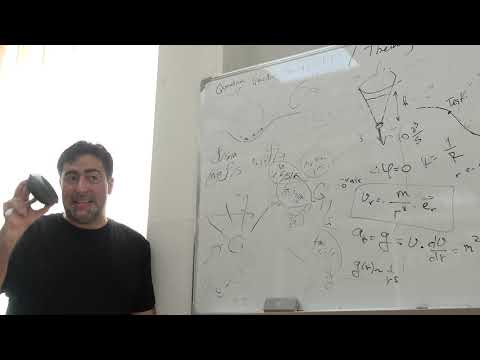
Subjective shadows of reality, objective view of Fabrik@ theory. Part II
Reality and Observationtitle-level map – no usable captions retrieveddate: 2019-09-05

6. Subjective shadows of reality, objective view of Fabrik@ theory. Part II

Duration: 4:37

Open current-book brief

Subjective shadows of reality, objective view of Fabrik@ theory. Part II is mapped to Reality and Observation. This video is about the early Space-Time-Reality and Reality Dimension vocabulary: the idea that the laboratory world is not the substrate itself, but an accessed/read-out image of something deeper. In the old language, objective and subjective reality sometimes appear as different shadows or layers.

In v10.01, the same idea is expressed more sharply as access/address ontology. Measurement, projection, Born weights, and observation are treated as access operations on finite substrate state, not as a separate mystical observer layer. Read this card as a bridge from STR phrasing to the current access-law language.

The strongest timestamp windows in this card point to STR, Reality Dimension, and access/readout ontology. For the current book connection, start with pp. 43-48: Reality Dimension and Access Law and pp. 100-107: QTT substrate master equation.

The formal DOI bridge here is Observation as Access and From Ledger to Born. Related field-note context is Reality itself is a dimension, Blog Map, and Legacy Terminology Map. No usable caption track was available for this video, so the mapping is intentionally title-level and conservative.

Book pages – QTT Main Book v10.01
  • pp. 43-48 – Reality Dimension and Access Law; the modern reading of early STR/reality-language posts
  • pp. 100-107 – QTT substrate master equation; access kernel and laboratory projection
✓ timestamp anchors✓ book v10.01 links✓ DOI/blog bridge
Subjective shadows of reality, objective view of Fabrik@ theory. Part I
Reality and Observationcaption: en-orig, 132 cue blocksdate: 2019-09-05

7. Subjective shadows of reality, objective view of Fabrik@ theory. Part I

Duration: 7:31

Open current-book brief

Subjective shadows of reality, objective view of Fabrik@ theory. Part I is mapped to Reality and Observation. This video is about the early Space-Time-Reality and Reality Dimension vocabulary: the idea that the laboratory world is not the substrate itself, but an accessed/read-out image of something deeper. In the old language, objective and subjective reality sometimes appear as different shadows or layers.

In v10.01, the same idea is expressed more sharply as access/address ontology. Measurement, projection, Born weights, and observation are treated as access operations on finite substrate state, not as a separate mystical observer layer. Read this card as a bridge from STR phrasing to the current access-law language.

The strongest timestamp windows in this card point to Gravity, access residuals, and the dark-sector bridge and STR, Reality Dimension, and access/readout ontology. For the current book connection, start with pp. 198-216: Endurance current and gravity, p. 535: Renewal dust as dark sector, and pp. 515-535: Substrate-curvature lensing.

The formal DOI bridge here is Newton's constant from QTT, Renewal Dust, and Abell 2744 lensing validation. Related field-note context is Bullet Cluster field note, Three-body / endurance, and Reality itself is a dimension. The timestamp chips above are caption-window anchors; use them as a guided navigation map, while treating the book and DOI links as the formal record.

Book pages – QTT Main Book v10.01
  • pp. 198-216 – Endurance current and gravity; Newtonian and Einstein-Hilbert shadows from the sink ledger
  • p. 535 – Renewal dust as dark sector; the non-particle missing-mass mechanism
  • pp. 515-535 – Substrate-curvature lensing; cluster-lensing morphology and curvature-source structure
✓ timestamp anchors✓ book v10.01 links✓ DOI/blog bridge
Quantum Physics and General Relativity Are Shadows of Fabrik@ Physics
Continuum Shadowscaption: en-orig, 72 cue blocksdate: 2019-09-04

8. Quantum Physics and General Relativity Are Shadows of Fabrik@ Physics

Duration: 3:54

Open current-book brief

Quantum Physics and General Relativity Are Shadows of Fabrik@ Physics is mapped to Continuum Shadows. This video uses the old shadows language: classical physics, quantum mechanics, and general relativity are treated as different visible projections of one deeper support structure. The important historical point is the desire to unify without merely pasting separate theories together.

In v10.01, that intuition becomes projection discipline. Continuum laws, GR, and QM are read as smooth or access-specific shadows of the finite substrate master equation. The video should be read as the conceptual seed; the book pages and DOI map hold the current mathematical form.

The strongest timestamp windows in this card point to GR/QM as shadows of one deeper substrate. For the current book connection, start with pp. 39-42: How to read this corpus, pp. 94-95: Continuum laws as smooth projections, and pp. 100-107: QTT substrate master equation.

The formal DOI bridge here is Book DOI and Hamiltonian framework. Related field-note context is Blog Map, DOI Map, and Legacy Terminology Map. The timestamp chips above are caption-window anchors; use them as a guided navigation map, while treating the book and DOI links as the formal record.

Book pages – QTT Main Book v10.01
  • pp. 39-42 – How to read this corpus; status labels and connected-manuscript discipline
  • pp. 94-95 – Continuum laws as smooth projections; why continuum equations are shadows rather than primitives
  • pp. 100-107 – QTT substrate master equation; the common operator skeleton behind the projections
✓ timestamp anchors✓ book v10.01 links✓ DOI/blog bridge
Quantum Physics and General Relativity Are Shadows of Fabrik@ Physics
Continuum Shadowstitle-level map – no usable captions retrieveddate: 2019-09-04

9. Quantum Physics and General Relativity Are Shadows of Fabrik@ Physics

Duration: 5:35

Open current-book brief

Quantum Physics and General Relativity Are Shadows of Fabrik@ Physics is mapped to Continuum Shadows. This video uses the old shadows language: classical physics, quantum mechanics, and general relativity are treated as different visible projections of one deeper support structure. The important historical point is the desire to unify without merely pasting separate theories together.

In v10.01, that intuition becomes projection discipline. Continuum laws, GR, and QM are read as smooth or access-specific shadows of the finite substrate master equation. The video should be read as the conceptual seed; the book pages and DOI map hold the current mathematical form.

The strongest timestamp windows in this card point to GR/QM as shadows of one deeper substrate. For the current book connection, start with pp. 39-42: How to read this corpus, pp. 94-95: Continuum laws as smooth projections, and pp. 100-107: QTT substrate master equation.

The formal DOI bridge here is Book DOI and Hamiltonian framework. Related field-note context is Blog Map, DOI Map, and Legacy Terminology Map. No usable caption track was available for this video, so the mapping is intentionally title-level and conservative.

Book pages – QTT Main Book v10.01
  • pp. 39-42 – How to read this corpus; status labels and connected-manuscript discipline
  • pp. 94-95 – Continuum laws as smooth projections; why continuum equations are shadows rather than primitives
  • pp. 100-107 – QTT substrate master equation; the common operator skeleton behind the projections
✓ timestamp anchors✓ book v10.01 links✓ DOI/blog bridge
Quantum Physics and General Relativity Are Shadows of Fabrik@ Physics
Continuum Shadowscaption: en-orig, 97 cue blocksdate: 2019-09-04

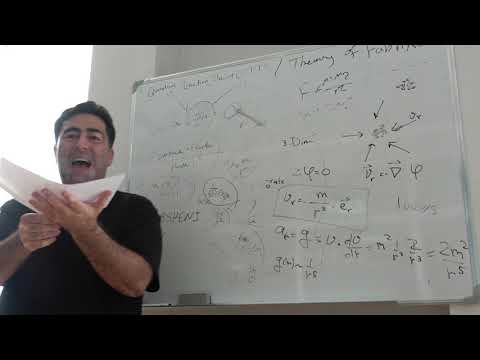
10. Quantum Physics and General Relativity Are Shadows of Fabrik@ Physics

Duration: 5:35

Open current-book brief

Quantum Physics and General Relativity Are Shadows of Fabrik@ Physics is mapped to Continuum Shadows. This video uses the old shadows language: classical physics, quantum mechanics, and general relativity are treated as different visible projections of one deeper support structure. The important historical point is the desire to unify without merely pasting separate theories together.

In v10.01, that intuition becomes projection discipline. Continuum laws, GR, and QM are read as smooth or access-specific shadows of the finite substrate master equation. The video should be read as the conceptual seed; the book pages and DOI map hold the current mathematical form.

The strongest timestamp windows in this card point to Gravity, access residuals, and the dark-sector bridge and GR/QM as shadows of one deeper substrate. For the current book connection, start with pp. 198-216: Endurance current and gravity, p. 535: Renewal dust as dark sector, and pp. 515-535: Substrate-curvature lensing.

The formal DOI bridge here is Newton's constant from QTT, Renewal Dust, and Abell 2744 lensing validation. Related field-note context is Bullet Cluster field note, Three-body / endurance, and Blog Map. The timestamp chips above are caption-window anchors; use them as a guided navigation map, while treating the book and DOI links as the formal record.

Book pages – QTT Main Book v10.01
  • pp. 198-216 – Endurance current and gravity; Newtonian and Einstein-Hilbert shadows from the sink ledger
  • p. 535 – Renewal dust as dark sector; the non-particle missing-mass mechanism
  • pp. 515-535 – Substrate-curvature lensing; cluster-lensing morphology and curvature-source structure
✓ timestamp anchors✓ book v10.01 links✓ DOI/blog bridge
Dark Matter or Akhasheni Scar? Part III
Gravity and Lensingcaption: en-orig, 140 cue blocksdate: 2019-09-03

11. Dark Matter or Akhasheni Scar? Part III

Duration: 8:39

Open current-book brief

Dark Matter or Akhasheni Scar? Part III is mapped to Gravity and Lensing. This video is part of the gravity and dark-sector bridge. Older references to dark matter, scars, Akhasheni, halos, or residual traces are best read as attempts to describe access residuals and curvature-source structure before the Renewal Dust and substrate-lensing language was fully standardized.

In v10.01, gravity is read from endurance current and finite sink bookkeeping, while missing-mass behavior is routed through residual access structure and lensing audits rather than a simple particle-halo replacement. The associated DOI links are the formal layer for Newton/GR shadows and the Renewal Dust family.

The strongest timestamp windows in this card point to Gravity, access residuals, and the dark-sector bridge. For the current book connection, start with pp. 198-216: Endurance current and gravity, p. 535: Renewal dust as dark sector, and pp. 515-535: Substrate-curvature lensing.

The formal DOI bridge here is Newton's constant from QTT, Renewal Dust, and Abell 2744 lensing validation. Related field-note context is Bullet Cluster field note, Three-body / endurance, and Legacy Terminology Map. The timestamp chips above are caption-window anchors; use them as a guided navigation map, while treating the book and DOI links as the formal record.

Book pages – QTT Main Book v10.01
  • pp. 198-216 – Endurance current and gravity; Newtonian and Einstein-Hilbert shadows from the sink ledger
  • p. 535 – Renewal dust as dark sector; the non-particle missing-mass mechanism
  • pp. 515-535 – Substrate-curvature lensing; cluster-lensing morphology and curvature-source structure
✓ timestamp anchors✓ book v10.01 links✓ DOI/blog bridge
Dark Matter or Akhasheni Scar? Part II
Gravity and Lensingcaption: en-orig, 96 cue blocksdate: 2019-09-03

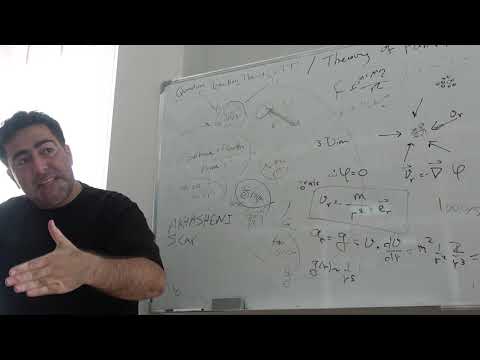
12. Dark Matter or Akhasheni Scar? Part II

Duration: 5:16

Open current-book brief

Dark Matter or Akhasheni Scar? Part II is mapped to Gravity and Lensing. This video is part of the gravity and dark-sector bridge. Older references to dark matter, scars, Akhasheni, halos, or residual traces are best read as attempts to describe access residuals and curvature-source structure before the Renewal Dust and substrate-lensing language was fully standardized.

In v10.01, gravity is read from endurance current and finite sink bookkeeping, while missing-mass behavior is routed through residual access structure and lensing audits rather than a simple particle-halo replacement. The associated DOI links are the formal layer for Newton/GR shadows and the Renewal Dust family.

The strongest timestamp windows in this card point to Gravity, access residuals, and the dark-sector bridge. For the current book connection, start with pp. 198-216: Endurance current and gravity, p. 535: Renewal dust as dark sector, and pp. 515-535: Substrate-curvature lensing.

The formal DOI bridge here is Newton's constant from QTT, Renewal Dust, and Abell 2744 lensing validation. Related field-note context is Bullet Cluster field note, Three-body / endurance, and Legacy Terminology Map. The timestamp chips above are caption-window anchors; use them as a guided navigation map, while treating the book and DOI links as the formal record.

Book pages – QTT Main Book v10.01
  • pp. 198-216 – Endurance current and gravity; Newtonian and Einstein-Hilbert shadows from the sink ledger
  • p. 535 – Renewal dust as dark sector; the non-particle missing-mass mechanism
  • pp. 515-535 – Substrate-curvature lensing; cluster-lensing morphology and curvature-source structure
✓ timestamp anchors✓ book v10.01 links✓ DOI/blog bridge
Dark Matter or Akhasheni Scar? Part III
Gravity and Lensingcaption: en-orig, 25 cue blocksdate: 2019-09-03

13. Dark Matter or Akhasheni Scar? Part III

Duration: 1:29

Open current-book brief

Dark Matter or Akhasheni Scar? Part III is mapped to Gravity and Lensing. This video is part of the gravity and dark-sector bridge. Older references to dark matter, scars, Akhasheni, halos, or residual traces are best read as attempts to describe access residuals and curvature-source structure before the Renewal Dust and substrate-lensing language was fully standardized.

In v10.01, gravity is read from endurance current and finite sink bookkeeping, while missing-mass behavior is routed through residual access structure and lensing audits rather than a simple particle-halo replacement. The associated DOI links are the formal layer for Newton/GR shadows and the Renewal Dust family.

The strongest timestamp windows in this card point to Gravity, access residuals, and the dark-sector bridge. For the current book connection, start with pp. 198-216: Endurance current and gravity, p. 535: Renewal dust as dark sector, and pp. 515-535: Substrate-curvature lensing.

The formal DOI bridge here is Newton's constant from QTT, Renewal Dust, and Abell 2744 lensing validation. Related field-note context is Bullet Cluster field note, Three-body / endurance, and Legacy Terminology Map. The timestamp chips above are caption-window anchors; use them as a guided navigation map, while treating the book and DOI links as the formal record.

Book pages – QTT Main Book v10.01
  • pp. 198-216 – Endurance current and gravity; Newtonian and Einstein-Hilbert shadows from the sink ledger
  • p. 535 – Renewal dust as dark sector; the non-particle missing-mass mechanism
  • pp. 515-535 – Substrate-curvature lensing; cluster-lensing morphology and curvature-source structure
✓ timestamp anchors✓ book v10.01 links✓ DOI/blog bridge
There is no "Dark Matter" needed in Fabrik@ Theory of "Gravity".
Gravity and Lensingcaption: en-orig, 356 cue blocksdate: 2019-08-30

14. There is no "Dark Matter" needed in Fabrik@ Theory of "Gravity".

Duration: 24:31

Open current-book brief

There is no "Dark Matter" needed in Fabrik@ Theory of "Gravity". is mapped to Gravity and Lensing. This video is part of the gravity and dark-sector bridge. Older references to dark matter, scars, Akhasheni, halos, or residual traces are best read as attempts to describe access residuals and curvature-source structure before the Renewal Dust and substrate-lensing language was fully standardized.

In v10.01, gravity is read from endurance current and finite sink bookkeeping, while missing-mass behavior is routed through residual access structure and lensing audits rather than a simple particle-halo replacement. The associated DOI links are the formal layer for Newton/GR shadows and the Renewal Dust family.

The strongest timestamp windows in this card point to Gravity, access residuals, and the dark-sector bridge. For the current book connection, start with pp. 198-216: Endurance current and gravity, p. 535: Renewal dust as dark sector, and pp. 515-535: Substrate-curvature lensing.

The formal DOI bridge here is Newton's constant from QTT, Renewal Dust, and Abell 2744 lensing validation. Related field-note context is Bullet Cluster field note, Three-body / endurance, and Legacy Terminology Map. The timestamp chips above are caption-window anchors; use them as a guided navigation map, while treating the book and DOI links as the formal record.

Book pages – QTT Main Book v10.01
  • pp. 198-216 – Endurance current and gravity; Newtonian and Einstein-Hilbert shadows from the sink ledger
  • p. 535 – Renewal dust as dark sector; the non-particle missing-mass mechanism
  • pp. 515-535 – Substrate-curvature lensing; cluster-lensing morphology and curvature-source structure
✓ timestamp anchors✓ book v10.01 links✓ DOI/blog bridge
Developing Fabrik@ Space/Time/Reality (STR) Subtraction - Part IV
Reality and Observationcaption: en-orig, 64 cue blocksdate: 2019-08-29

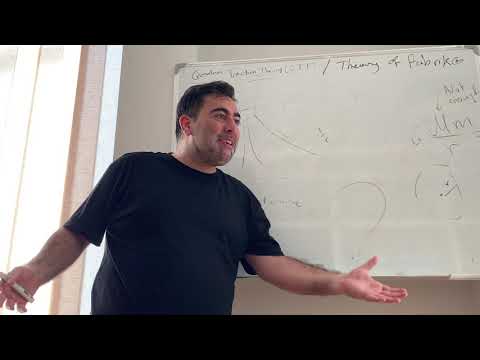
15. Developing Fabrik@ Space/Time/Reality (STR) Subtraction – Part IV

Duration: 4:20

Open current-book brief

Developing Fabrik@ Space/Time/Reality (STR) Subtraction – Part IV is mapped to Reality and Observation. This video is about the early Space-Time-Reality and Reality Dimension vocabulary: the idea that the laboratory world is not the substrate itself, but an accessed/read-out image of something deeper. In the old language, objective and subjective reality sometimes appear as different shadows or layers.

In v10.01, the same idea is expressed more sharply as access/address ontology. Measurement, projection, Born weights, and observation are treated as access operations on finite substrate state, not as a separate mystical observer layer. Read this card as a bridge from STR phrasing to the current access-law language.

The strongest timestamp windows in this card point to Gravity, access residuals, and the dark-sector bridge and STR, Reality Dimension, and access/readout ontology. For the current book connection, start with pp. 198-216: Endurance current and gravity, p. 535: Renewal dust as dark sector, and pp. 515-535: Substrate-curvature lensing.

The formal DOI bridge here is Newton's constant from QTT, Renewal Dust, and Abell 2744 lensing validation. Related field-note context is Bullet Cluster field note, Three-body / endurance, and Reality itself is a dimension. The timestamp chips above are caption-window anchors; use them as a guided navigation map, while treating the book and DOI links as the formal record.

Book pages – QTT Main Book v10.01
  • pp. 198-216 – Endurance current and gravity; Newtonian and Einstein-Hilbert shadows from the sink ledger
  • p. 535 – Renewal dust as dark sector; the non-particle missing-mass mechanism
  • pp. 515-535 – Substrate-curvature lensing; cluster-lensing morphology and curvature-source structure
✓ timestamp anchors✓ book v10.01 links✓ DOI/blog bridge
Developing Fabrik@ Space/Time/Reality (STR) Subtraction - Part III
Reality and Observationtitle-level map – no usable captions retrieveddate: 2019-08-29

16. Developing Fabrik@ Space/Time/Reality (STR) Subtraction – Part III

Duration: 1:55

Open current-book brief

Developing Fabrik@ Space/Time/Reality (STR) Subtraction – Part III is mapped to Reality and Observation. This video is about the early Space-Time-Reality and Reality Dimension vocabulary: the idea that the laboratory world is not the substrate itself, but an accessed/read-out image of something deeper. In the old language, objective and subjective reality sometimes appear as different shadows or layers.

In v10.01, the same idea is expressed more sharply as access/address ontology. Measurement, projection, Born weights, and observation are treated as access operations on finite substrate state, not as a separate mystical observer layer. Read this card as a bridge from STR phrasing to the current access-law language.

The strongest timestamp windows in this card point to STR, Reality Dimension, and access/readout ontology. For the current book connection, start with pp. 43-48: Reality Dimension and Access Law and pp. 100-107: QTT substrate master equation.

The formal DOI bridge here is Observation as Access and From Ledger to Born. Related field-note context is Reality itself is a dimension, Blog Map, and Legacy Terminology Map. No usable caption track was available for this video, so the mapping is intentionally title-level and conservative.

Book pages – QTT Main Book v10.01
  • pp. 43-48 – Reality Dimension and Access Law; the modern reading of early STR/reality-language posts
  • pp. 100-107 – QTT substrate master equation; access kernel and laboratory projection
✓ timestamp anchors✓ book v10.01 links✓ DOI/blog bridge
Developing Fabrik@ Space/Time/Reality (STR) subtraction - Part II
Reality and Observationcaption: en-orig, 81 cue blocksdate: 2019-08-29

17. Developing Fabrik@ Space/Time/Reality (STR) subtraction – Part II

Duration: 5:10

Open current-book brief

Developing Fabrik@ Space/Time/Reality (STR) subtraction – Part II is mapped to Reality and Observation. This video is about the early Space-Time-Reality and Reality Dimension vocabulary: the idea that the laboratory world is not the substrate itself, but an accessed/read-out image of something deeper. In the old language, objective and subjective reality sometimes appear as different shadows or layers.

In v10.01, the same idea is expressed more sharply as access/address ontology. Measurement, projection, Born weights, and observation are treated as access operations on finite substrate state, not as a separate mystical observer layer. Read this card as a bridge from STR phrasing to the current access-law language.

The strongest timestamp windows in this card point to STR, Reality Dimension, and access/readout ontology and Gravity, access residuals, and the dark-sector bridge. For the current book connection, start with pp. 43-48: Reality Dimension and Access Law, pp. 100-107: QTT substrate master equation, and pp. 198-216: Endurance current and gravity.

The formal DOI bridge here is Observation as Access, From Ledger to Born, and Newton's constant from QTT. Related field-note context is Reality itself is a dimension, Blog Map, and Bullet Cluster field note. The timestamp chips above are caption-window anchors; use them as a guided navigation map, while treating the book and DOI links as the formal record.

Book pages – QTT Main Book v10.01
  • pp. 43-48 – Reality Dimension and Access Law; the modern reading of early STR/reality-language posts
  • pp. 100-107 – QTT substrate master equation; access kernel and laboratory projection
  • pp. 198-216 – Endurance current and gravity; Newtonian and Einstein-Hilbert shadows from the sink ledger
✓ timestamp anchors✓ book v10.01 links✓ DOI/blog bridge
Developing Fabrik@ Space/Time/Reality (STR) subtraction - Part I
Reality and Observationcaption: en-orig, 354 cue blocksdate: 2019-08-29

18. Developing Fabrik@ Space/Time/Reality (STR) subtraction – Part I

Duration: 23:44

Open current-book brief

Developing Fabrik@ Space/Time/Reality (STR) subtraction – Part I is mapped to Reality and Observation. This video is about the early Space-Time-Reality and Reality Dimension vocabulary: the idea that the laboratory world is not the substrate itself, but an accessed/read-out image of something deeper. In the old language, objective and subjective reality sometimes appear as different shadows or layers.

In v10.01, the same idea is expressed more sharply as access/address ontology. Measurement, projection, Born weights, and observation are treated as access operations on finite substrate state, not as a separate mystical observer layer. Read this card as a bridge from STR phrasing to the current access-law language.

The strongest timestamp windows in this card point to STR, Reality Dimension, and access/readout ontology and Gravity, access residuals, and the dark-sector bridge. For the current book connection, start with pp. 43-48: Reality Dimension and Access Law, pp. 100-107: QTT substrate master equation, and pp. 198-216: Endurance current and gravity.

The formal DOI bridge here is Observation as Access, From Ledger to Born, and Newton's constant from QTT. Related field-note context is Reality itself is a dimension, Blog Map, and Bullet Cluster field note. The timestamp chips above are caption-window anchors; use them as a guided navigation map, while treating the book and DOI links as the formal record.

Book pages – QTT Main Book v10.01
  • pp. 43-48 – Reality Dimension and Access Law; the modern reading of early STR/reality-language posts
  • pp. 100-107 – QTT substrate master equation; access kernel and laboratory projection
  • pp. 198-216 – Endurance current and gravity; Newtonian and Einstein-Hilbert shadows from the sink ledger
✓ timestamp anchors✓ book v10.01 links✓ DOI/blog bridge
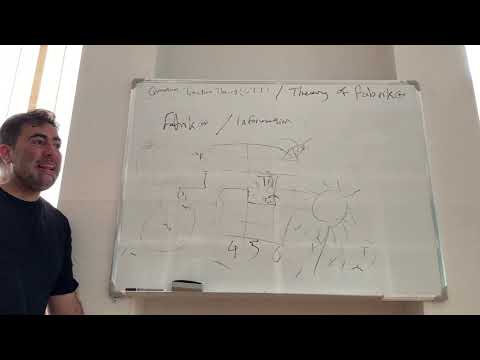
Explaining Locality in Fabrik@ system - Part III
Quantum Foundationstitle-level map – no usable captions retrieveddate: 2019-08-27

19. Explaining Locality in Fabrik@ system – Part III

Duration: 7:03

Open current-book brief

Explaining Locality in Fabrik@ system – Part III is mapped to Quantum Foundations. This video covers quantum-foundation experiments such as double slit, delayed-choice eraser, superposition, locality, entanglement, or measurement. The early language tries to explain why the experimental readout changes without turning the observer into a magic ingredient.

In v10.01, these discussions are routed through access projection, Born weights, path-integral/action language, and measurement as access. The current book reading is that the laboratory record is a finite access image of substrate state, with the DOI papers carrying the formal derivations.

The strongest timestamp windows in this card point to Double slit, quantum eraser, superposition, and measurement. For the current book connection, start with pp. 106-107: Access-projection master system, pp. 408-410: Born rule from QTT A1-A7, and pp. 424-429: Hamilton principle and path integrals.

The formal DOI bridge here is Observation as Access, From Ledger to Born, and Hamilton/Feynman/action. Related field-note context is Delayed-choice field note, Born rule field note, and Legacy Terminology Map. No usable caption track was available for this video, so the mapping is intentionally title-level and conservative.

Book pages – QTT Main Book v10.01
  • pp. 106-107 – Access-projection master system; wavefunction, collapse, and local access update
  • pp. 408-410 – Born rule from QTT A1-A7; exchangeability, addresses, and uniqueness
  • pp. 424-429 – Hamilton principle and path integrals; least action and Feynman weights from dial transport
✓ timestamp anchors✓ book v10.01 links✓ DOI/blog bridge
Explaining Locality in Fabrik@ system - Part II
Quantum Foundationstitle-level map – no usable captions retrieveddate: 2019-08-27

20. Explaining Locality in Fabrik@ system – Part II

Duration: 9:39

Open current-book brief

Explaining Locality in Fabrik@ system – Part II is mapped to Quantum Foundations. This video covers quantum-foundation experiments such as double slit, delayed-choice eraser, superposition, locality, entanglement, or measurement. The early language tries to explain why the experimental readout changes without turning the observer into a magic ingredient.

In v10.01, these discussions are routed through access projection, Born weights, path-integral/action language, and measurement as access. The current book reading is that the laboratory record is a finite access image of substrate state, with the DOI papers carrying the formal derivations.

The strongest timestamp windows in this card point to Double slit, quantum eraser, superposition, and measurement. For the current book connection, start with pp. 106-107: Access-projection master system, pp. 408-410: Born rule from QTT A1-A7, and pp. 424-429: Hamilton principle and path integrals.

The formal DOI bridge here is Observation as Access, From Ledger to Born, and Hamilton/Feynman/action. Related field-note context is Delayed-choice field note, Born rule field note, and Legacy Terminology Map. No usable caption track was available for this video, so the mapping is intentionally title-level and conservative.

Book pages – QTT Main Book v10.01
  • pp. 106-107 – Access-projection master system; wavefunction, collapse, and local access update
  • pp. 408-410 – Born rule from QTT A1-A7; exchangeability, addresses, and uniqueness
  • pp. 424-429 – Hamilton principle and path integrals; least action and Feynman weights from dial transport
✓ timestamp anchors✓ book v10.01 links✓ DOI/blog bridge
Explaining Locality in Fabrik@ system - Part I
Quantum Foundationscaption: en-orig, 447 cue blocksdate: 2019-08-27

21. Explaining Locality in Fabrik@ system – Part I

Duration: 32:36

Open current-book brief

Explaining Locality in Fabrik@ system – Part I is mapped to Quantum Foundations. This video covers quantum-foundation experiments such as double slit, delayed-choice eraser, superposition, locality, entanglement, or measurement. The early language tries to explain why the experimental readout changes without turning the observer into a magic ingredient.

In v10.01, these discussions are routed through access projection, Born weights, path-integral/action language, and measurement as access. The current book reading is that the laboratory record is a finite access image of substrate state, with the DOI papers carrying the formal derivations.

The strongest timestamp windows in this card point to STR, Reality Dimension, and access/readout ontology, GR/QM as shadows of one deeper substrate, and Double slit, quantum eraser, superposition, and measurement. For the current book connection, start with pp. 43-48: Reality Dimension and Access Law, pp. 100-107: QTT substrate master equation, and pp. 39-42: How to read this corpus.

The formal DOI bridge here is Observation as Access, From Ledger to Born, and Book DOI. Related field-note context is Reality itself is a dimension, Blog Map, and DOI Map. The timestamp chips above are caption-window anchors; use them as a guided navigation map, while treating the book and DOI links as the formal record.

Book pages – QTT Main Book v10.01
  • pp. 43-48 – Reality Dimension and Access Law; the modern reading of early STR/reality-language posts
  • pp. 100-107 – QTT substrate master equation; access kernel and laboratory projection
  • pp. 39-42 – How to read this corpus; status labels and connected-manuscript discipline
✓ timestamp anchors✓ book v10.01 links✓ DOI/blog bridge
Fabrik@ Theory - Explaining " Dark Matter" Part II
Gravity and Lensingtitle-level map – no usable captions retrieveddate: 2019-08-26

22. Fabrik@ Theory – Explaining " Dark Matter" Part II

Duration: 3:02

Open current-book brief

Fabrik@ Theory – Explaining " Dark Matter" Part II is mapped to Gravity and Lensing. This video is part of the gravity and dark-sector bridge. Older references to dark matter, scars, Akhasheni, halos, or residual traces are best read as attempts to describe access residuals and curvature-source structure before the Renewal Dust and substrate-lensing language was fully standardized.

In v10.01, gravity is read from endurance current and finite sink bookkeeping, while missing-mass behavior is routed through residual access structure and lensing audits rather than a simple particle-halo replacement. The associated DOI links are the formal layer for Newton/GR shadows and the Renewal Dust family.

The strongest timestamp windows in this card point to Gravity, access residuals, and the dark-sector bridge. For the current book connection, start with pp. 198-216: Endurance current and gravity, p. 535: Renewal dust as dark sector, and pp. 515-535: Substrate-curvature lensing.

The formal DOI bridge here is Newton's constant from QTT, Renewal Dust, and Abell 2744 lensing validation. Related field-note context is Bullet Cluster field note, Three-body / endurance, and Legacy Terminology Map. No usable caption track was available for this video, so the mapping is intentionally title-level and conservative.

Book pages – QTT Main Book v10.01
  • pp. 198-216 – Endurance current and gravity; Newtonian and Einstein-Hilbert shadows from the sink ledger
  • p. 535 – Renewal dust as dark sector; the non-particle missing-mass mechanism
  • pp. 515-535 – Substrate-curvature lensing; cluster-lensing morphology and curvature-source structure
✓ timestamp anchors✓ book v10.01 links✓ DOI/blog bridge
Fabrik@ Theory - explaining "Dark Matter"
Gravity and Lensingcaption: en-orig, 125 cue blocksdate: 2019-08-26

23. Fabrik@ Theory – explaining "Dark Matter"

Duration: 8:48

Open current-book brief

Fabrik@ Theory – explaining "Dark Matter" is mapped to Gravity and Lensing. This video is part of the gravity and dark-sector bridge. Older references to dark matter, scars, Akhasheni, halos, or residual traces are best read as attempts to describe access residuals and curvature-source structure before the Renewal Dust and substrate-lensing language was fully standardized.

In v10.01, gravity is read from endurance current and finite sink bookkeeping, while missing-mass behavior is routed through residual access structure and lensing audits rather than a simple particle-halo replacement. The associated DOI links are the formal layer for Newton/GR shadows and the Renewal Dust family.

The strongest timestamp windows in this card point to STR, Reality Dimension, and access/readout ontology and Gravity, access residuals, and the dark-sector bridge. For the current book connection, start with pp. 43-48: Reality Dimension and Access Law, pp. 100-107: QTT substrate master equation, and pp. 198-216: Endurance current and gravity.

The formal DOI bridge here is Observation as Access, From Ledger to Born, and Newton's constant from QTT. Related field-note context is Reality itself is a dimension, Blog Map, and Bullet Cluster field note. The timestamp chips above are caption-window anchors; use them as a guided navigation map, while treating the book and DOI links as the formal record.

Book pages – QTT Main Book v10.01
  • pp. 43-48 – Reality Dimension and Access Law; the modern reading of early STR/reality-language posts
  • pp. 100-107 – QTT substrate master equation; access kernel and laboratory projection
  • pp. 198-216 – Endurance current and gravity; Newtonian and Einstein-Hilbert shadows from the sink ledger
✓ timestamp anchors✓ book v10.01 links✓ DOI/blog bridge
Explaining Cosmology Crisis based on Fabrik@ theory
Cosmology and Clockstitle-level map – no usable captions retrieveddate: 2019-08-23

24. Explaining Cosmology Crisis based on Fabrik@ theory

Duration: 4:52

Open current-book brief

Explaining Cosmology Crisis based on Fabrik@ theory is mapped to Cosmology and Clocks. This video is in the cosmology and clock route: early dark-energy, Hubble, expansion, and vacuum-language discussion. The key idea is that the large-scale universe is being read through a creation/current ledger rather than through a free parameter that is simply fitted after the fact.

In v10.01, this becomes the ABC/WV volume ledger, vacuum capacity language, time-drift from the Law of Creation, and background-clock closure. The video is an early conceptual pass; the book pages and DOI links are where the modern derivation and audit trail should be cited.

The strongest timestamp windows in this card point to Dark energy, Hubble drift, and creation-law cosmology. For the current book connection, start with pp. 199-201: ABC/WV volume ledger, pp. 711-712: Vacuum capacity and creation, and pp. 1131-1138: Time Drift from the Law of Creation.

The formal DOI bridge here is Time Drift from Creation Law, Vacuum Capacity, and ABC/WV Closure. Related field-note context is Hubble tension field note, Baryons-only universe age, and Legacy Terminology Map. No usable caption track was available for this video, so the mapping is intentionally title-level and conservative.

Book pages – QTT Main Book v10.01
  • pp. 199-201 – ABC/WV volume ledger; baryons-only volume and the 18-lock
  • pp. 711-712 – Vacuum capacity and creation; capacity-limited vacuum language before cosmology readout
  • pp. 1131-1138 – Time Drift from the Law of Creation; redshift/time-drift backbone
✓ timestamp anchors✓ book v10.01 links✓ DOI/blog bridge
Explaining Cosmology Crisis based on Fabrik@ theory
Cosmology and Clockstitle-level map – no usable captions retrieveddate: 2019-08-23

25. Explaining Cosmology Crisis based on Fabrik@ theory

Duration: 2:09

Open current-book brief

Explaining Cosmology Crisis based on Fabrik@ theory is mapped to Cosmology and Clocks. This video is in the cosmology and clock route: early dark-energy, Hubble, expansion, and vacuum-language discussion. The key idea is that the large-scale universe is being read through a creation/current ledger rather than through a free parameter that is simply fitted after the fact.

In v10.01, this becomes the ABC/WV volume ledger, vacuum capacity language, time-drift from the Law of Creation, and background-clock closure. The video is an early conceptual pass; the book pages and DOI links are where the modern derivation and audit trail should be cited.

The strongest timestamp windows in this card point to Dark energy, Hubble drift, and creation-law cosmology. For the current book connection, start with pp. 199-201: ABC/WV volume ledger, pp. 711-712: Vacuum capacity and creation, and pp. 1131-1138: Time Drift from the Law of Creation.

The formal DOI bridge here is Time Drift from Creation Law, Vacuum Capacity, and ABC/WV Closure. Related field-note context is Hubble tension field note, Baryons-only universe age, and Legacy Terminology Map. No usable caption track was available for this video, so the mapping is intentionally title-level and conservative.

Book pages – QTT Main Book v10.01
  • pp. 199-201 – ABC/WV volume ledger; baryons-only volume and the 18-lock
  • pp. 711-712 – Vacuum capacity and creation; capacity-limited vacuum language before cosmology readout
  • pp. 1131-1138 – Time Drift from the Law of Creation; redshift/time-drift backbone
✓ timestamp anchors✓ book v10.01 links✓ DOI/blog bridge
Time and Space in Barba System
Finite Substrate and Bundlestitle-level map – no usable captions retrieveddate: 2019-08-22

26. Time and Space in Barba System

Duration: 3:42

Open current-book brief

Time and Space in Barba System is mapped to Finite Substrate and Bundles. This video sits in the old Barba/handshake vocabulary: active support, creation/destruction language, and the idea that physical persistence costs counted substrate capacity. The informal images are useful because they show the intuition of finite support before the present bundle notation was settled.

In v10.01, the book translates that language into active bundles, endurance bookkeeping, A2/A3 support, and the Law of Endurance. The formal reading is not that a folk mechanism was added to physics; it is that a finite substrate ledger has to count what persists, what updates, and what can be accessed.

The strongest timestamp windows in this card point to Barba systems, handshakes, bundles, and endurance. For the current book connection, start with pp. 51-56: Artian's Origami and A2/A3 and pp. 159-166: Law of Endurance.

The formal DOI bridge here is A7U distributed bundles and QTT computational framework. Related field-note context is Artian's Origami, Barpa Handshake of Pixellates, and Legacy Terminology Map. No usable caption track was available for this video, so the mapping is intentionally title-level and conservative.

Book pages – QTT Main Book v10.01
  • pp. 51-56 – Artian's Origami and A2/A3; fold, endurance, creation, and the human ontology bridge
  • pp. 159-166 – Law of Endurance; the capacity-cost reading behind the old system language
✓ timestamp anchors✓ book v10.01 links✓ DOI/blog bridge
Time and Space in Barba
Finite Substrate and Bundlestitle-level map – no usable captions retrieveddate: 2019-08-22

27. Time and Space in Barba

Duration: 3:36

Open current-book brief

Time and Space in Barba is mapped to Finite Substrate and Bundles. This video sits in the old Barba/handshake vocabulary: active support, creation/destruction language, and the idea that physical persistence costs counted substrate capacity. The informal images are useful because they show the intuition of finite support before the present bundle notation was settled.

In v10.01, the book translates that language into active bundles, endurance bookkeeping, A2/A3 support, and the Law of Endurance. The formal reading is not that a folk mechanism was added to physics; it is that a finite substrate ledger has to count what persists, what updates, and what can be accessed.

The strongest timestamp windows in this card point to Barba systems, handshakes, bundles, and endurance. For the current book connection, start with pp. 51-56: Artian's Origami and A2/A3 and pp. 159-166: Law of Endurance.

The formal DOI bridge here is A7U distributed bundles and QTT computational framework. Related field-note context is Artian's Origami, Barpa Handshake of Pixellates, and Legacy Terminology Map. No usable caption track was available for this video, so the mapping is intentionally title-level and conservative.

Book pages – QTT Main Book v10.01
  • pp. 51-56 – Artian's Origami and A2/A3; fold, endurance, creation, and the human ontology bridge
  • pp. 159-166 – Law of Endurance; the capacity-cost reading behind the old system language
✓ timestamp anchors✓ book v10.01 links✓ DOI/blog bridge
Time and Space in Barba System
Finite Substrate and Bundlescaption: en-orig, 38 cue blocksdate: 2019-08-22

28. Time and Space in Barba System

Duration: 2:11

Open current-book brief

Time and Space in Barba System is mapped to Finite Substrate and Bundles. This video sits in the old Barba/handshake vocabulary: active support, creation/destruction language, and the idea that physical persistence costs counted substrate capacity. The informal images are useful because they show the intuition of finite support before the present bundle notation was settled.

In v10.01, the book translates that language into active bundles, endurance bookkeeping, A2/A3 support, and the Law of Endurance. The formal reading is not that a folk mechanism was added to physics; it is that a finite substrate ledger has to count what persists, what updates, and what can be accessed.

The strongest timestamp windows in this card point to Barba systems, handshakes, bundles, and endurance. For the current book connection, start with pp. 51-56: Artian's Origami and A2/A3 and pp. 159-166: Law of Endurance.

The formal DOI bridge here is A7U distributed bundles and QTT computational framework. Related field-note context is Artian's Origami, Barpa Handshake of Pixellates, and Legacy Terminology Map. The timestamp chips above are caption-window anchors; use them as a guided navigation map, while treating the book and DOI links as the formal record.

Book pages – QTT Main Book v10.01
  • pp. 51-56 – Artian's Origami and A2/A3; fold, endurance, creation, and the human ontology bridge
  • pp. 159-166 – Law of Endurance; the capacity-cost reading behind the old system language
✓ timestamp anchors✓ book v10.01 links✓ DOI/blog bridge
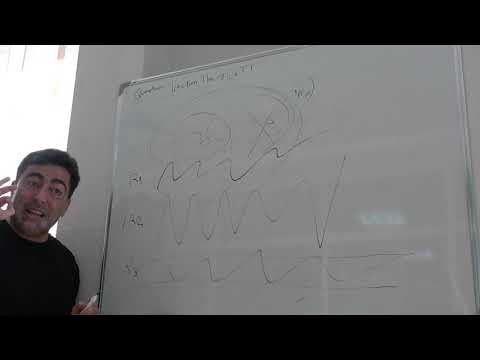
Time and Space in Barba System
Finite Substrate and Bundlestitle-level map – no usable captions retrieveddate: 2019-08-22

29. Time and Space in Barba System

Duration: 11:15

Open current-book brief

Time and Space in Barba System is mapped to Finite Substrate and Bundles. This video sits in the old Barba/handshake vocabulary: active support, creation/destruction language, and the idea that physical persistence costs counted substrate capacity. The informal images are useful because they show the intuition of finite support before the present bundle notation was settled.

In v10.01, the book translates that language into active bundles, endurance bookkeeping, A2/A3 support, and the Law of Endurance. The formal reading is not that a folk mechanism was added to physics; it is that a finite substrate ledger has to count what persists, what updates, and what can be accessed.

The strongest timestamp windows in this card point to Barba systems, handshakes, bundles, and endurance. For the current book connection, start with pp. 51-56: Artian's Origami and A2/A3 and pp. 159-166: Law of Endurance.

The formal DOI bridge here is A7U distributed bundles and QTT computational framework. Related field-note context is Artian's Origami, Barpa Handshake of Pixellates, and Legacy Terminology Map. No usable caption track was available for this video, so the mapping is intentionally title-level and conservative.

Book pages – QTT Main Book v10.01
  • pp. 51-56 – Artian's Origami and A2/A3; fold, endurance, creation, and the human ontology bridge
  • pp. 159-166 – Law of Endurance; the capacity-cost reading behind the old system language
✓ timestamp anchors✓ book v10.01 links✓ DOI/blog bridge
Fabrik@, Barba System & Realities
Reality and Observationcaption: en-orig, 119 cue blocksdate: 2019-08-21

30. Fabrik@, Barba System & Realities

Duration: 7:01

Open current-book brief

Fabrik@, Barba System & Realities is mapped to Reality and Observation. This video is about the early Space-Time-Reality and Reality Dimension vocabulary: the idea that the laboratory world is not the substrate itself, but an accessed/read-out image of something deeper. In the old language, objective and subjective reality sometimes appear as different shadows or layers.

In v10.01, the same idea is expressed more sharply as access/address ontology. Measurement, projection, Born weights, and observation are treated as access operations on finite substrate state, not as a separate mystical observer layer. Read this card as a bridge from STR phrasing to the current access-law language.

The strongest timestamp windows in this card point to STR, Reality Dimension, and access/readout ontology and GR/QM as shadows of one deeper substrate. For the current book connection, start with pp. 43-48: Reality Dimension and Access Law, pp. 100-107: QTT substrate master equation, and pp. 39-42: How to read this corpus.

The formal DOI bridge here is Observation as Access, From Ledger to Born, and Book DOI. Related field-note context is Reality itself is a dimension, Blog Map, and DOI Map. The timestamp chips above are caption-window anchors; use them as a guided navigation map, while treating the book and DOI links as the formal record.

Book pages – QTT Main Book v10.01
  • pp. 43-48 – Reality Dimension and Access Law; the modern reading of early STR/reality-language posts
  • pp. 100-107 – QTT substrate master equation; access kernel and laboratory projection
  • pp. 39-42 – How to read this corpus; status labels and connected-manuscript discipline
✓ timestamp anchors✓ book v10.01 links✓ DOI/blog bridge
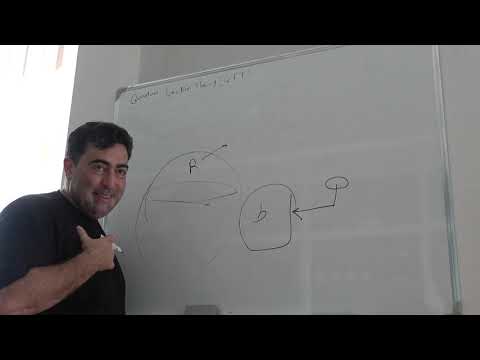
Reality Is a Dimension
Reality and Observationcaption: en-orig, 123 cue blocksdate: 2019-08-20

31. Reality Is a Dimension

Duration: 7:15

Open current-book brief

Reality Is a Dimension is mapped to Reality and Observation. This video is about the early Space-Time-Reality and Reality Dimension vocabulary: the idea that the laboratory world is not the substrate itself, but an accessed/read-out image of something deeper. In the old language, objective and subjective reality sometimes appear as different shadows or layers.

In v10.01, the same idea is expressed more sharply as access/address ontology. Measurement, projection, Born weights, and observation are treated as access operations on finite substrate state, not as a separate mystical observer layer. Read this card as a bridge from STR phrasing to the current access-law language.

The strongest timestamp windows in this card point to STR, Reality Dimension, and access/readout ontology. For the current book connection, start with pp. 43-48: Reality Dimension and Access Law and pp. 100-107: QTT substrate master equation.

The formal DOI bridge here is Observation as Access and From Ledger to Born. Related field-note context is Reality itself is a dimension, Blog Map, and Legacy Terminology Map. The timestamp chips above are caption-window anchors; use them as a guided navigation map, while treating the book and DOI links as the formal record.

Book pages – QTT Main Book v10.01
  • pp. 43-48 – Reality Dimension and Access Law; the modern reading of early STR/reality-language posts
  • pp. 100-107 – QTT substrate master equation; access kernel and laboratory projection
✓ timestamp anchors✓ book v10.01 links✓ DOI/blog bridge
Reality Is a Dimension
Reality and Observationcaption: en-orig, 75 cue blocksdate: 2019-08-20

32. Reality Is a Dimension

Duration: 4:43

Open current-book brief

Reality Is a Dimension is mapped to Reality and Observation. This video is about the early Space-Time-Reality and Reality Dimension vocabulary: the idea that the laboratory world is not the substrate itself, but an accessed/read-out image of something deeper. In the old language, objective and subjective reality sometimes appear as different shadows or layers.

In v10.01, the same idea is expressed more sharply as access/address ontology. Measurement, projection, Born weights, and observation are treated as access operations on finite substrate state, not as a separate mystical observer layer. Read this card as a bridge from STR phrasing to the current access-law language.

The strongest timestamp windows in this card point to Gravity, access residuals, and the dark-sector bridge and STR, Reality Dimension, and access/readout ontology. For the current book connection, start with pp. 198-216: Endurance current and gravity, p. 535: Renewal dust as dark sector, and pp. 515-535: Substrate-curvature lensing.

The formal DOI bridge here is Newton's constant from QTT, Renewal Dust, and Abell 2744 lensing validation. Related field-note context is Bullet Cluster field note, Three-body / endurance, and Reality itself is a dimension. The timestamp chips above are caption-window anchors; use them as a guided navigation map, while treating the book and DOI links as the formal record.

Book pages – QTT Main Book v10.01
  • pp. 198-216 – Endurance current and gravity; Newtonian and Einstein-Hilbert shadows from the sink ledger
  • p. 535 – Renewal dust as dark sector; the non-particle missing-mass mechanism
  • pp. 515-535 – Substrate-curvature lensing; cluster-lensing morphology and curvature-source structure
✓ timestamp anchors✓ book v10.01 links✓ DOI/blog bridge
Reality Is a Dimension
Reality and Observationcaption: en-orig, 74 cue blocksdate: 2019-08-20

33. Reality Is a Dimension

Duration: 4:10

Open current-book brief

Reality Is a Dimension is mapped to Reality and Observation. This video is about the early Space-Time-Reality and Reality Dimension vocabulary: the idea that the laboratory world is not the substrate itself, but an accessed/read-out image of something deeper. In the old language, objective and subjective reality sometimes appear as different shadows or layers.

In v10.01, the same idea is expressed more sharply as access/address ontology. Measurement, projection, Born weights, and observation are treated as access operations on finite substrate state, not as a separate mystical observer layer. Read this card as a bridge from STR phrasing to the current access-law language.

The strongest timestamp windows in this card point to STR, Reality Dimension, and access/readout ontology. For the current book connection, start with pp. 43-48: Reality Dimension and Access Law and pp. 100-107: QTT substrate master equation.

The formal DOI bridge here is Observation as Access and From Ledger to Born. Related field-note context is Reality itself is a dimension, Blog Map, and Legacy Terminology Map. The timestamp chips above are caption-window anchors; use them as a guided navigation map, while treating the book and DOI links as the formal record.

Book pages – QTT Main Book v10.01
  • pp. 43-48 – Reality Dimension and Access Law; the modern reading of early STR/reality-language posts
  • pp. 100-107 – QTT substrate master equation; access kernel and laboratory projection
✓ timestamp anchors✓ book v10.01 links✓ DOI/blog bridge
Reality Is a Dimension
Reality and Observationcaption: en-orig, 99 cue blocksdate: 2019-08-20

34. Reality Is a Dimension

Duration: 6:25

Open current-book brief

Reality Is a Dimension is mapped to Reality and Observation. This video is about the early Space-Time-Reality and Reality Dimension vocabulary: the idea that the laboratory world is not the substrate itself, but an accessed/read-out image of something deeper. In the old language, objective and subjective reality sometimes appear as different shadows or layers.

In v10.01, the same idea is expressed more sharply as access/address ontology. Measurement, projection, Born weights, and observation are treated as access operations on finite substrate state, not as a separate mystical observer layer. Read this card as a bridge from STR phrasing to the current access-law language.

The strongest timestamp windows in this card point to STR, Reality Dimension, and access/readout ontology. For the current book connection, start with pp. 43-48: Reality Dimension and Access Law and pp. 100-107: QTT substrate master equation.

The formal DOI bridge here is Observation as Access and From Ledger to Born. Related field-note context is Reality itself is a dimension, Blog Map, and Legacy Terminology Map. The timestamp chips above are caption-window anchors; use them as a guided navigation map, while treating the book and DOI links as the formal record.

Book pages – QTT Main Book v10.01
  • pp. 43-48 – Reality Dimension and Access Law; the modern reading of early STR/reality-language posts
  • pp. 100-107 – QTT substrate master equation; access kernel and laboratory projection
✓ timestamp anchors✓ book v10.01 links✓ DOI/blog bridge
Theory of Fabrika and how it can explain double slit / quantum eraser Part III
Quantum Foundationscaption: en-orig, 94 cue blocksdate: 2019-08-19

35. Theory of Fabrika and how it can explain double slit / quantum eraser Part III

Duration: 6:06

Open current-book brief

Theory of Fabrika and how it can explain double slit / quantum eraser Part III is mapped to Quantum Foundations. This video covers quantum-foundation experiments such as double slit, delayed-choice eraser, superposition, locality, entanglement, or measurement. The early language tries to explain why the experimental readout changes without turning the observer into a magic ingredient.

In v10.01, these discussions are routed through access projection, Born weights, path-integral/action language, and measurement as access. The current book reading is that the laboratory record is a finite access image of substrate state, with the DOI papers carrying the formal derivations.

The strongest timestamp windows in this card point to Gravity, access residuals, and the dark-sector bridge and Double slit, quantum eraser, superposition, and measurement. For the current book connection, start with pp. 198-216: Endurance current and gravity, p. 535: Renewal dust as dark sector, and pp. 515-535: Substrate-curvature lensing.

The formal DOI bridge here is Newton's constant from QTT, Renewal Dust, and Abell 2744 lensing validation. Related field-note context is Bullet Cluster field note, Three-body / endurance, and Delayed-choice field note. The timestamp chips above are caption-window anchors; use them as a guided navigation map, while treating the book and DOI links as the formal record.

Book pages – QTT Main Book v10.01
  • pp. 198-216 – Endurance current and gravity; Newtonian and Einstein-Hilbert shadows from the sink ledger
  • p. 535 – Renewal dust as dark sector; the non-particle missing-mass mechanism
  • pp. 515-535 – Substrate-curvature lensing; cluster-lensing morphology and curvature-source structure
✓ timestamp anchors✓ book v10.01 links✓ DOI/blog bridge
Theory of Fabrika and how it can explain double slit / quantum eraser Part II
Quantum Foundationscaption: en-orig, 651 cue blocksdate: 2019-08-19

36. Theory of Fabrika and how it can explain double slit / quantum eraser Part II

Duration: 37:12

Open current-book brief

Theory of Fabrika and how it can explain double slit / quantum eraser Part II is mapped to Quantum Foundations. This video covers quantum-foundation experiments such as double slit, delayed-choice eraser, superposition, locality, entanglement, or measurement. The early language tries to explain why the experimental readout changes without turning the observer into a magic ingredient.

In v10.01, these discussions are routed through access projection, Born weights, path-integral/action language, and measurement as access. The current book reading is that the laboratory record is a finite access image of substrate state, with the DOI papers carrying the formal derivations.

The strongest timestamp windows in this card point to Double slit, quantum eraser, superposition, and measurement, GR/QM as shadows of one deeper substrate, and Gravity, access residuals, and the dark-sector bridge. For the current book connection, start with pp. 106-107: Access-projection master system, pp. 408-410: Born rule from QTT A1-A7, and pp. 424-429: Hamilton principle and path integrals.

The formal DOI bridge here is Observation as Access, From Ledger to Born, and Hamilton/Feynman/action. Related field-note context is Delayed-choice field note, Born rule field note, and Blog Map. The timestamp chips above are caption-window anchors; use them as a guided navigation map, while treating the book and DOI links as the formal record.

Book pages – QTT Main Book v10.01
  • pp. 106-107 – Access-projection master system; wavefunction, collapse, and local access update
  • pp. 408-410 – Born rule from QTT A1-A7; exchangeability, addresses, and uniqueness
  • pp. 424-429 – Hamilton principle and path integrals; least action and Feynman weights from dial transport
✓ timestamp anchors✓ book v10.01 links✓ DOI/blog bridge
Theory of Fabrika and how it can explain double slit / quantum eraser Part I
Quantum Foundationscaption: en-orig, 292 cue blocksdate: 2019-08-19

37. Theory of Fabrika and how it can explain double slit / quantum eraser Part I

Duration: 17:43

Open current-book brief

Theory of Fabrika and how it can explain double slit / quantum eraser Part I is mapped to Quantum Foundations. This video covers quantum-foundation experiments such as double slit, delayed-choice eraser, superposition, locality, entanglement, or measurement. The early language tries to explain why the experimental readout changes without turning the observer into a magic ingredient.

In v10.01, these discussions are routed through access projection, Born weights, path-integral/action language, and measurement as access. The current book reading is that the laboratory record is a finite access image of substrate state, with the DOI papers carrying the formal derivations.

The strongest timestamp windows in this card point to Double slit, quantum eraser, superposition, and measurement. For the current book connection, start with pp. 106-107: Access-projection master system, pp. 408-410: Born rule from QTT A1-A7, and pp. 424-429: Hamilton principle and path integrals.

The formal DOI bridge here is Observation as Access, From Ledger to Born, and Hamilton/Feynman/action. Related field-note context is Delayed-choice field note, Born rule field note, and Legacy Terminology Map. The timestamp chips above are caption-window anchors; use them as a guided navigation map, while treating the book and DOI links as the formal record.

Book pages – QTT Main Book v10.01
  • pp. 106-107 – Access-projection master system; wavefunction, collapse, and local access update
  • pp. 408-410 – Born rule from QTT A1-A7; exchangeability, addresses, and uniqueness
  • pp. 424-429 – Hamilton principle and path integrals; least action and Feynman weights from dial transport
✓ timestamp anchors✓ book v10.01 links✓ DOI/blog bridge
Quantum Traction Theory (QTT) Session 2 Part I
Origin and Vocabularycaption: en-orig, 155 cue blocksdate: 2019-08-16

38. Quantum Traction Theory (QTT) Session 2 Part I

Duration: 10:48

Open current-book brief

Quantum Traction Theory (QTT) Session 2 Part I is mapped to Origin and Vocabulary. This video belongs to the origin layer of the project: the first plain-language attempt to describe a finite substrate before the book had its present notation. Words such as Fabrik@, Fabrika, pixellate, and single-pixel reality should be read historically, as Ali trying to point at finite address support and capacity bookkeeping before the formal A1-A7 rail language was mature.

In QTT Main Book v10.01, this material is routed through finite-address ontology, pixellate support, and the readable bridge between ordinary language and the formal substrate master equation. The video is therefore valuable as an archive of intuition, while the book and DOI map supply the current citation layer.

The strongest timestamp windows in this card point to GR/QM as shadows of one deeper substrate and QTT origin and finite-substrate orientation. For the current book connection, start with pp. 39-42: How to read this corpus, pp. 94-95: Continuum laws as smooth projections, and pp. 100-107: QTT substrate master equation.

The formal DOI bridge here is Book DOI, Hamiltonian framework, and QTT computational framework. Related field-note context is Blog Map, DOI Map, and Legacy Terminology Map. The timestamp chips above are caption-window anchors; use them as a guided navigation map, while treating the book and DOI links as the formal record.

Book pages – QTT Main Book v10.01
  • pp. 39-42 – How to read this corpus; status labels and connected-manuscript discipline
  • pp. 94-95 – Continuum laws as smooth projections; why continuum equations are shadows rather than primitives
  • pp. 100-107 – QTT substrate master equation; the common operator skeleton behind the projections
✓ timestamp anchors✓ book v10.01 links✓ DOI/blog bridge
Quantum Traction Theory (QTT) Session 2 Part II
Origin and Vocabularycaption: en-orig, 180 cue blocksdate: 2019-08-16

39. Quantum Traction Theory (QTT) Session 2 Part II

Duration: 10:47

Open current-book brief

Quantum Traction Theory (QTT) Session 2 Part II is mapped to Origin and Vocabulary. This video belongs to the origin layer of the project: the first plain-language attempt to describe a finite substrate before the book had its present notation. Words such as Fabrik@, Fabrika, pixellate, and single-pixel reality should be read historically, as Ali trying to point at finite address support and capacity bookkeeping before the formal A1-A7 rail language was mature.

In QTT Main Book v10.01, this material is routed through finite-address ontology, pixellate support, and the readable bridge between ordinary language and the formal substrate master equation. The video is therefore valuable as an archive of intuition, while the book and DOI map supply the current citation layer.

The strongest timestamp windows in this card point to QTT origin and finite-substrate orientation. For the current book connection, start with pp. 43-48: Readable ontology and access language and pp. 153-156: Space quanta and pixellates.

The formal DOI bridge here is Book DOI and QTT computational framework. Related field-note context is Legacy Terminology Map and 2019 QTT origin post. The timestamp chips above are caption-window anchors; use them as a guided navigation map, while treating the book and DOI links as the formal record.

Book pages – QTT Main Book v10.01
  • pp. 43-48 – Readable ontology and access language; the v10.01 bridge from simple language to formal rails
  • pp. 153-156 – Space quanta and pixellates; the current substrate vocabulary for early Fabrik@ language
✓ timestamp anchors✓ book v10.01 links✓ DOI/blog bridge
Quantum Traction Theory (QTT) Session 2 Part III
Origin and Vocabularycaption: en-orig, 189 cue blocksdate: 2019-08-16

40. Quantum Traction Theory (QTT) Session 2 Part III

Duration: 10:47

Open current-book brief

Quantum Traction Theory (QTT) Session 2 Part III is mapped to Origin and Vocabulary. This video belongs to the origin layer of the project: the first plain-language attempt to describe a finite substrate before the book had its present notation. Words such as Fabrik@, Fabrika, pixellate, and single-pixel reality should be read historically, as Ali trying to point at finite address support and capacity bookkeeping before the formal A1-A7 rail language was mature.

In QTT Main Book v10.01, this material is routed through finite-address ontology, pixellate support, and the readable bridge between ordinary language and the formal substrate master equation. The video is therefore valuable as an archive of intuition, while the book and DOI map supply the current citation layer.

The strongest timestamp windows in this card point to QTT origin and finite-substrate orientation, Double slit, quantum eraser, superposition, and measurement, and GR/QM as shadows of one deeper substrate. For the current book connection, start with pp. 43-48: Readable ontology and access language, pp. 153-156: Space quanta and pixellates, and pp. 106-107: Access-projection master system.

The formal DOI bridge here is Book DOI, QTT computational framework, and Observation as Access. Related field-note context is Legacy Terminology Map, 2019 QTT origin post, and Delayed-choice field note. The timestamp chips above are caption-window anchors; use them as a guided navigation map, while treating the book and DOI links as the formal record.

Book pages – QTT Main Book v10.01
  • pp. 43-48 – Readable ontology and access language; the v10.01 bridge from simple language to formal rails
  • pp. 153-156 – Space quanta and pixellates; the current substrate vocabulary for early Fabrik@ language
  • pp. 106-107 – Access-projection master system; wavefunction, collapse, and local access update
✓ timestamp anchors✓ book v10.01 links✓ DOI/blog bridge
Quantum Traction Theory (QTT) Session 2 Part IV
Origin and Vocabularycaption: en-orig, 77 cue blocksdate: 2019-08-16

41. Quantum Traction Theory (QTT) Session 2 Part IV

Duration: 4:18

Open current-book brief

Quantum Traction Theory (QTT) Session 2 Part IV is mapped to Origin and Vocabulary. This video belongs to the origin layer of the project: the first plain-language attempt to describe a finite substrate before the book had its present notation. Words such as Fabrik@, Fabrika, pixellate, and single-pixel reality should be read historically, as Ali trying to point at finite address support and capacity bookkeeping before the formal A1-A7 rail language was mature.

In QTT Main Book v10.01, this material is routed through finite-address ontology, pixellate support, and the readable bridge between ordinary language and the formal substrate master equation. The video is therefore valuable as an archive of intuition, while the book and DOI map supply the current citation layer.

The strongest timestamp windows in this card point to QTT origin and finite-substrate orientation. For the current book connection, start with pp. 43-48: Readable ontology and access language and pp. 153-156: Space quanta and pixellates.

The formal DOI bridge here is Book DOI and QTT computational framework. Related field-note context is Legacy Terminology Map and 2019 QTT origin post. The timestamp chips above are caption-window anchors; use them as a guided navigation map, while treating the book and DOI links as the formal record.

Book pages – QTT Main Book v10.01
  • pp. 43-48 – Readable ontology and access language; the v10.01 bridge from simple language to formal rails
  • pp. 153-156 – Space quanta and pixellates; the current substrate vocabulary for early Fabrik@ language
✓ timestamp anchors✓ book v10.01 links✓ DOI/blog bridge
Quantum Traction Theory (QTT) Session 2 Part VI
Origin and Vocabularycaption: en-orig, 37 cue blocksdate: 2019-08-16

42. Quantum Traction Theory (QTT) Session 2 Part VI

Duration: 2:34

Open current-book brief

Quantum Traction Theory (QTT) Session 2 Part VI is mapped to Origin and Vocabulary. This video belongs to the origin layer of the project: the first plain-language attempt to describe a finite substrate before the book had its present notation. Words such as Fabrik@, Fabrika, pixellate, and single-pixel reality should be read historically, as Ali trying to point at finite address support and capacity bookkeeping before the formal A1-A7 rail language was mature.

In QTT Main Book v10.01, this material is routed through finite-address ontology, pixellate support, and the readable bridge between ordinary language and the formal substrate master equation. The video is therefore valuable as an archive of intuition, while the book and DOI map supply the current citation layer.

The strongest timestamp windows in this card point to QTT origin and finite-substrate orientation. For the current book connection, start with pp. 43-48: Readable ontology and access language and pp. 153-156: Space quanta and pixellates.

The formal DOI bridge here is Book DOI and QTT computational framework. Related field-note context is Legacy Terminology Map and 2019 QTT origin post. The timestamp chips above are caption-window anchors; use them as a guided navigation map, while treating the book and DOI links as the formal record.

Book pages – QTT Main Book v10.01
  • pp. 43-48 – Readable ontology and access language; the v10.01 bridge from simple language to formal rails
  • pp. 153-156 – Space quanta and pixellates; the current substrate vocabulary for early Fabrik@ language
✓ timestamp anchors✓ book v10.01 links✓ DOI/blog bridge
Quantum Traction Theory (QTT) Session 2 Part V
Origin and Vocabularycaption: en-orig, 106 cue blocksdate: 2019-08-16

43. Quantum Traction Theory (QTT) Session 2 Part V

Duration: 6:47

Open current-book brief

Quantum Traction Theory (QTT) Session 2 Part V is mapped to Origin and Vocabulary. This video belongs to the origin layer of the project: the first plain-language attempt to describe a finite substrate before the book had its present notation. Words such as Fabrik@, Fabrika, pixellate, and single-pixel reality should be read historically, as Ali trying to point at finite address support and capacity bookkeeping before the formal A1-A7 rail language was mature.

In QTT Main Book v10.01, this material is routed through finite-address ontology, pixellate support, and the readable bridge between ordinary language and the formal substrate master equation. The video is therefore valuable as an archive of intuition, while the book and DOI map supply the current citation layer.

The strongest timestamp windows in this card point to QTT origin and finite-substrate orientation. For the current book connection, start with pp. 43-48: Readable ontology and access language and pp. 153-156: Space quanta and pixellates.

The formal DOI bridge here is Book DOI and QTT computational framework. Related field-note context is Legacy Terminology Map and 2019 QTT origin post. The timestamp chips above are caption-window anchors; use them as a guided navigation map, while treating the book and DOI links as the formal record.

Book pages – QTT Main Book v10.01
  • pp. 43-48 – Readable ontology and access language; the v10.01 bridge from simple language to formal rails
  • pp. 153-156 – Space quanta and pixellates; the current substrate vocabulary for early Fabrik@ language
✓ timestamp anchors✓ book v10.01 links✓ DOI/blog bridge
Quantum Traction Theory (QTT) Part III
Origin and Vocabularycaption: en-orig, 202 cue blocksdate: 2019-08-15

44. Quantum Traction Theory (QTT) Part III

Duration: 13:05

Open current-book brief

Quantum Traction Theory (QTT) Part III is mapped to Origin and Vocabulary. This video belongs to the origin layer of the project: the first plain-language attempt to describe a finite substrate before the book had its present notation. Words such as Fabrik@, Fabrika, pixellate, and single-pixel reality should be read historically, as Ali trying to point at finite address support and capacity bookkeeping before the formal A1-A7 rail language was mature.

In QTT Main Book v10.01, this material is routed through finite-address ontology, pixellate support, and the readable bridge between ordinary language and the formal substrate master equation. The video is therefore valuable as an archive of intuition, while the book and DOI map supply the current citation layer.

The strongest timestamp windows in this card point to QTT origin and finite-substrate orientation and Gravity, access residuals, and the dark-sector bridge. For the current book connection, start with pp. 43-48: Readable ontology and access language, pp. 153-156: Space quanta and pixellates, and pp. 198-216: Endurance current and gravity.

The formal DOI bridge here is Book DOI, QTT computational framework, and Newton's constant from QTT. Related field-note context is Legacy Terminology Map, 2019 QTT origin post, and Bullet Cluster field note. The timestamp chips above are caption-window anchors; use them as a guided navigation map, while treating the book and DOI links as the formal record.

Book pages – QTT Main Book v10.01
  • pp. 43-48 – Readable ontology and access language; the v10.01 bridge from simple language to formal rails
  • pp. 153-156 – Space quanta and pixellates; the current substrate vocabulary for early Fabrik@ language
  • pp. 198-216 – Endurance current and gravity; Newtonian and Einstein-Hilbert shadows from the sink ledger
✓ timestamp anchors✓ book v10.01 links✓ DOI/blog bridge
Quantum Traction Theory (QTT) Part II
Origin and Vocabularycaption: en-orig, 250 cue blocksdate: 2019-08-15

45. Quantum Traction Theory (QTT) Part II

Duration: 16:39

Open current-book brief

Quantum Traction Theory (QTT) Part II is mapped to Origin and Vocabulary. This video belongs to the origin layer of the project: the first plain-language attempt to describe a finite substrate before the book had its present notation. Words such as Fabrik@, Fabrika, pixellate, and single-pixel reality should be read historically, as Ali trying to point at finite address support and capacity bookkeeping before the formal A1-A7 rail language was mature.

In QTT Main Book v10.01, this material is routed through finite-address ontology, pixellate support, and the readable bridge between ordinary language and the formal substrate master equation. The video is therefore valuable as an archive of intuition, while the book and DOI map supply the current citation layer.

The strongest timestamp windows in this card point to Dark energy, Hubble drift, and creation-law cosmology, QTT origin and finite-substrate orientation, and Gravity, access residuals, and the dark-sector bridge. For the current book connection, start with pp. 199-201: ABC/WV volume ledger, pp. 711-712: Vacuum capacity and creation, and pp. 1131-1138: Time Drift from the Law of Creation.

The formal DOI bridge here is Time Drift from Creation Law, Vacuum Capacity, and ABC/WV Closure. Related field-note context is Hubble tension field note, Baryons-only universe age, and Legacy Terminology Map. The timestamp chips above are caption-window anchors; use them as a guided navigation map, while treating the book and DOI links as the formal record.

Book pages – QTT Main Book v10.01
  • pp. 199-201 – ABC/WV volume ledger; baryons-only volume and the 18-lock
  • pp. 711-712 – Vacuum capacity and creation; capacity-limited vacuum language before cosmology readout
  • pp. 1131-1138 – Time Drift from the Law of Creation; redshift/time-drift backbone
✓ timestamp anchors✓ book v10.01 links✓ DOI/blog bridge
Quantum Traction Theory (QTT) Part I
Origin and Vocabularycaption: en-orig, 333 cue blocksdate: 2019-08-15

46. Quantum Traction Theory (QTT) Part I

Duration: 22:21

Open current-book brief

Quantum Traction Theory (QTT) Part I is mapped to Origin and Vocabulary. This video belongs to the origin layer of the project: the first plain-language attempt to describe a finite substrate before the book had its present notation. Words such as Fabrik@, Fabrika, pixellate, and single-pixel reality should be read historically, as Ali trying to point at finite address support and capacity bookkeeping before the formal A1-A7 rail language was mature.

In QTT Main Book v10.01, this material is routed through finite-address ontology, pixellate support, and the readable bridge between ordinary language and the formal substrate master equation. The video is therefore valuable as an archive of intuition, while the book and DOI map supply the current citation layer.

The strongest timestamp windows in this card point to GR/QM as shadows of one deeper substrate, QTT origin and finite-substrate orientation, Dark energy, Hubble drift, and creation-law cosmology, and Gravity, access residuals, and the dark-sector bridge. For the current book connection, start with pp. 39-42: How to read this corpus, pp. 94-95: Continuum laws as smooth projections, and pp. 100-107: QTT substrate master equation.

The formal DOI bridge here is Book DOI, Hamiltonian framework, and QTT computational framework. Related field-note context is Blog Map, DOI Map, and Legacy Terminology Map. The timestamp chips above are caption-window anchors; use them as a guided navigation map, while treating the book and DOI links as the formal record.

Book pages – QTT Main Book v10.01
  • pp. 39-42 – How to read this corpus; status labels and connected-manuscript discipline
  • pp. 94-95 – Continuum laws as smooth projections; why continuum equations are shadows rather than primitives
  • pp. 100-107 – QTT substrate master equation; the common operator skeleton behind the projections
✓ timestamp anchors✓ book v10.01 links✓ DOI/blog bridge